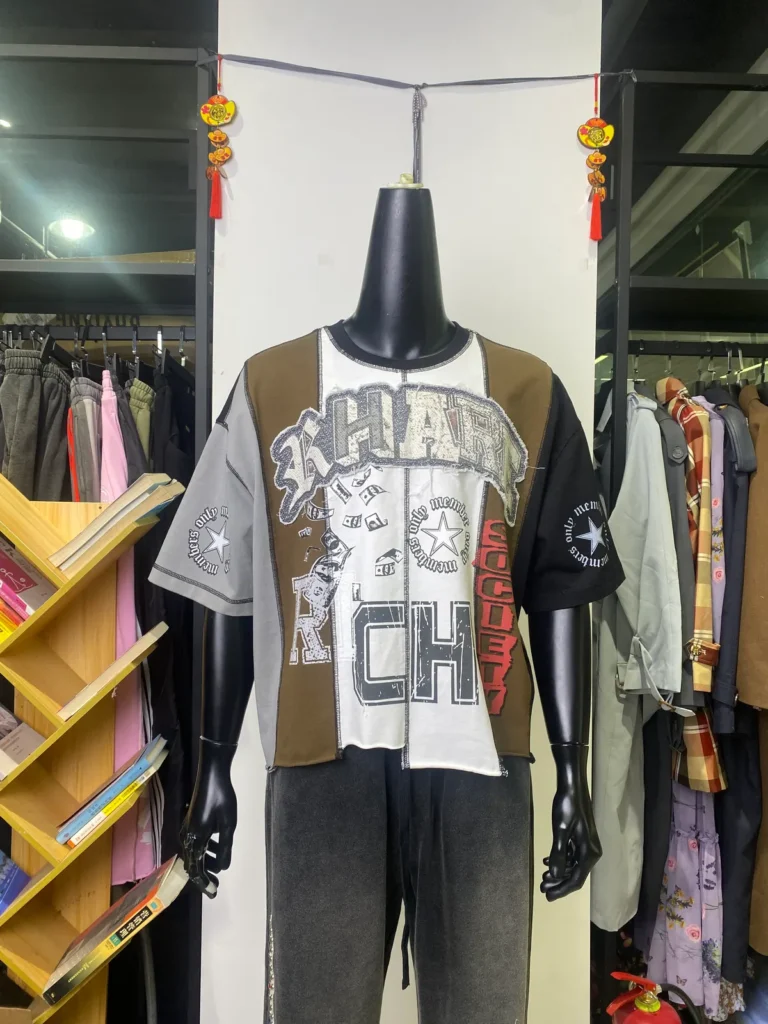
A T-shirt can look right in a photo but feel wrong when the production sample arrives. Before asking a factory for a price, define the fabric, shape and finish you actually want. This guide gives streetwear buyers a practical way to brief a custom T-shirt without treating one GSM number as a complete specification.
Start with the garment, not a fabric number
Decide whether the T-shirt should feel light and fluid, substantial and structured, or somewhere between. Note the intended season, audience, fit and decoration. A boxy tee with a large screen print may need a different fabric and pattern from a closer-fitting basic tee. Share reference garments or photos, but identify which details matter: shoulder drop, body length, sleeve width, collar shape and hand feel.
Ask for a physical fabric swatch before confirming a sample. Photos and supplier descriptions cannot reliably show softness, stretch, surface texture or how a fabric hangs.
What GSM tells you—and what it does not
GSM means grams per square meter: the mass of a fabric area. It is useful when comparing proposed fabrics, but it does not by itself establish quality, opacity, durability or the fit of a finished shirt. Two fabrics with a similar GSM can behave differently because of fiber blend, yarn, knit structure and finishing. A higher GSM may also change the garment’s drape and perceived warmth.
When requesting options, give the supplier a target hand feel and a reference sample as well as an approximate GSM range. If you have no preferred number, ask the factory to show a few swatches that achieve the look you want, then approve one for sampling.
Compare fiber and knit construction
Cotton jersey is a common starting point for custom streetwear T-shirts. Cotton blends can change stretch, recovery, texture or care behavior; the right choice depends on the design and intended use. Ask whether the swatch is single jersey, a different knit, or a treated fabric, and confirm the fiber composition. If a claim about composition or performance matters to your brand, agree how it will be checked before bulk production.
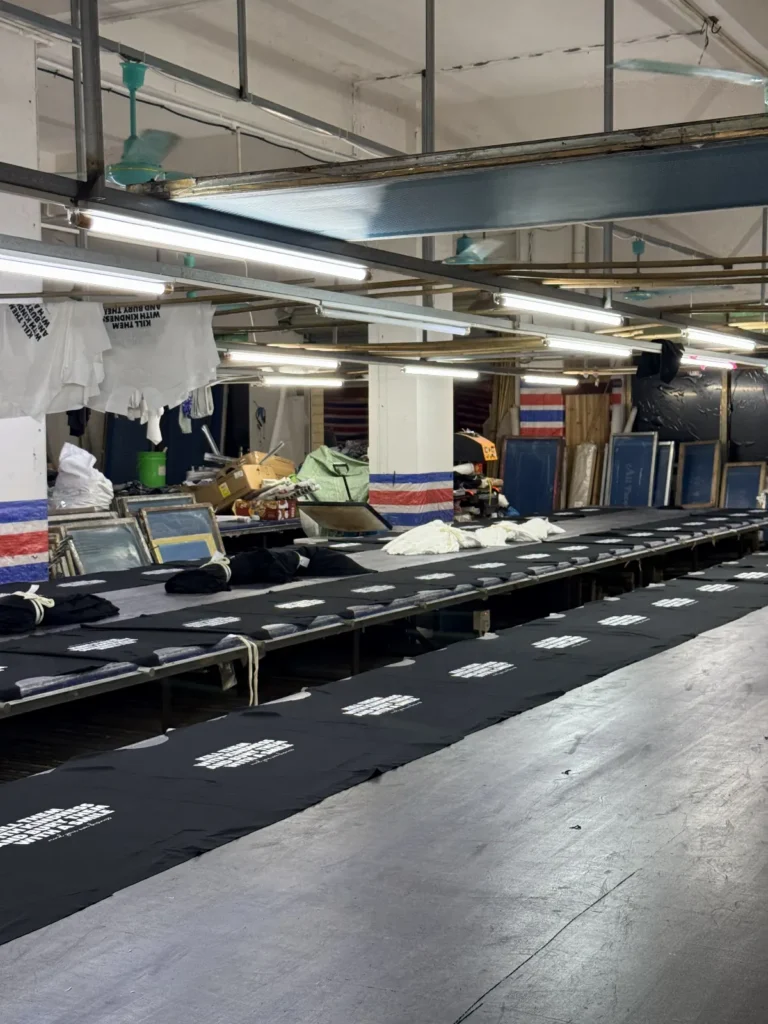
Surface matters for decoration. Fine artwork and large solid prints may behave differently on a smooth jersey, a textured knit or a fabric that will be washed after printing. Our printing versus embroidery guide explains how artwork size and fabric affect the method choice.
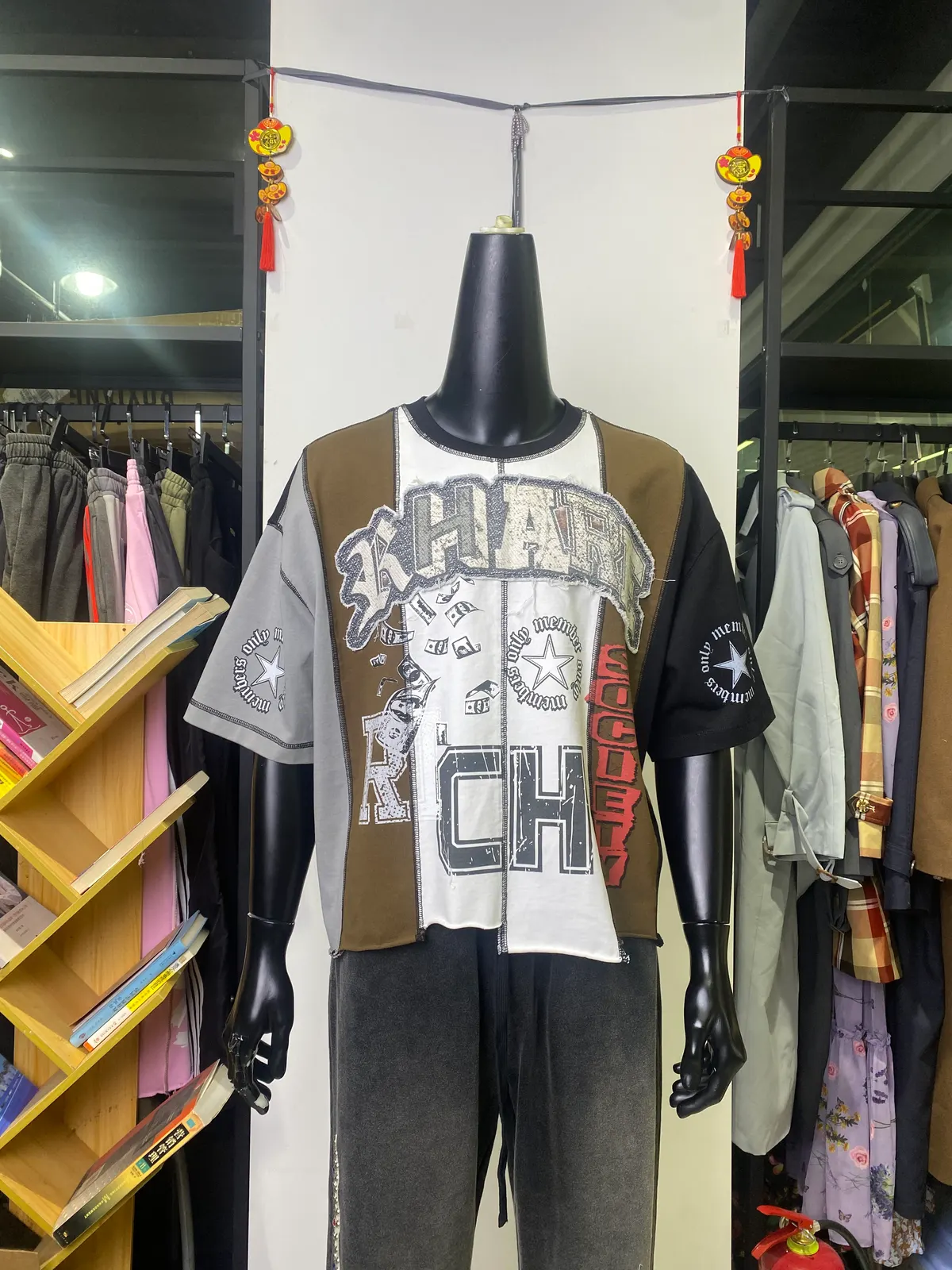
Approve fit and construction on the real sample
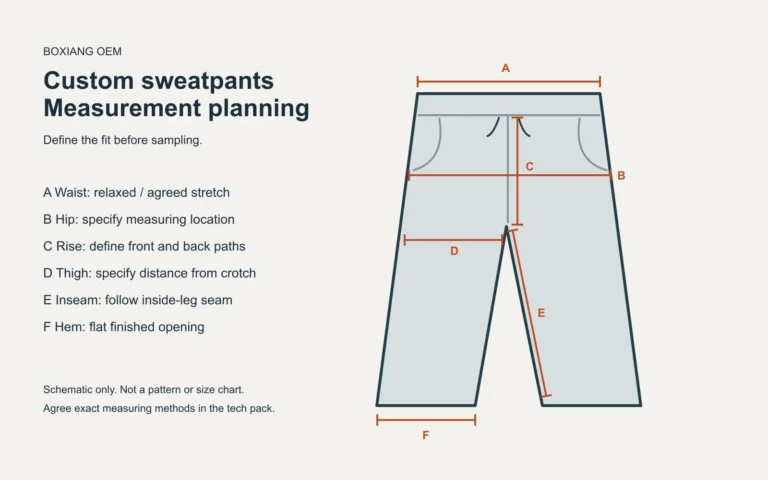
Fabric selection and pattern development should be reviewed together. Specify a size chart with garment measurements rather than relying only on labels such as “oversized” or “regular.” For a streetwear tee, check shoulder width, chest, body length, sleeve opening, collar width and neck rib recovery. Examine seams, hem finish and print placement on the actual sample.
Wash the sample according to the intended care instructions, then compare measurements and appearance with the approved pre-wash sample. If a finish or garment wash is part of the design, include it in the sample rather than assuming the untreated fabric will predict the final result. Record requested changes clearly in a tech pack so the next sample is judged against the same specification.
A useful T-shirt RFQ checklist
- Reference photos or an existing garment, with the key details marked
- Target fabric composition, hand feel and any preferred GSM range
- Fit description and size chart with garment measurements
- Color references, artwork files, decoration size and placement
- Labels, packaging and intended washing or finishing process
- Quantity by style, color and size; destination country and target date
At Boxiang, the usual starting MOQ is 50 pieces per style and color. A basic sample is typically around seven days after payment and complete design information are received; bulk production is typically 15–30 days after sample approval and deposit. Your actual schedule and quotation should be confirmed against the chosen fabric, artwork and order details.
Explore our custom T-shirt manufacturing options, or send us your brief for a quotation. If you only have references and no completed tech pack, send those first; we can discuss the missing specifications with you.
Have a question about your own design?
Share your reference, quantity per color and destination. Our team can review the relevant options for your order.
Discuss your projectExplore manufacturing options