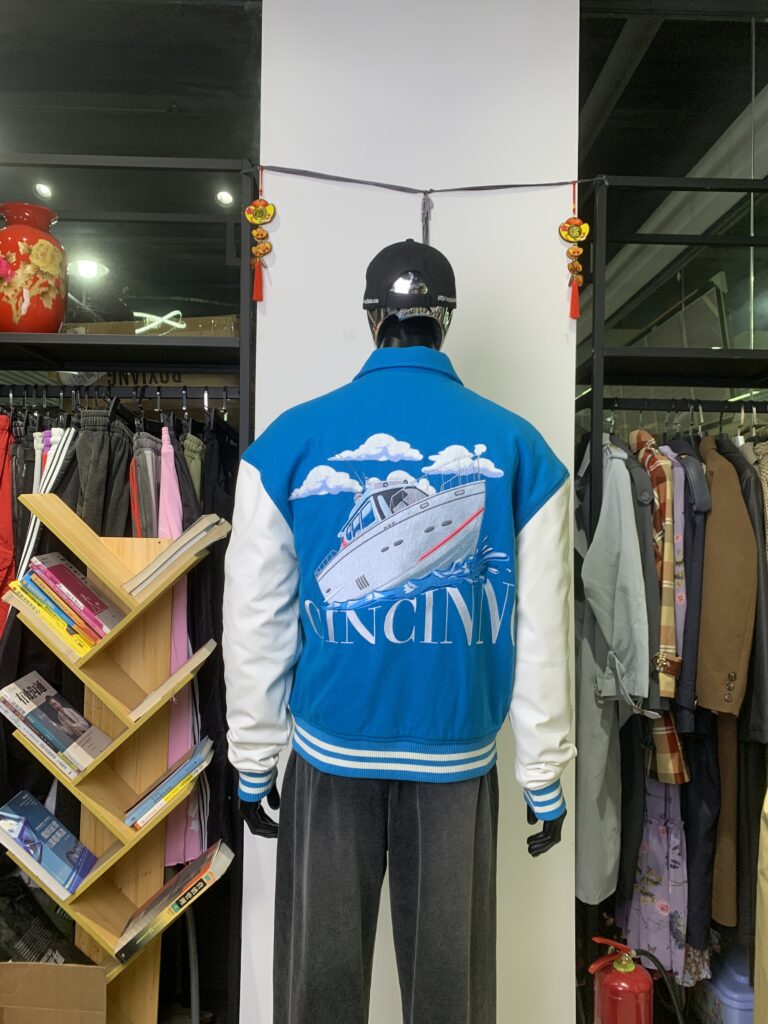
A custom varsity jacket is a collection piece with more decisions than a standard sweatshirt or T-shirt. Its body fabric, sleeves, rib, lining, patches, embroidery, closures and fit all need to work together. A clear brief makes the sampling stage more useful and helps a factory quote the right construction instead of guessing from a mood board.
This guide explains how brands can plan a custom varsity jacket for a streetwear collection: what to decide first, which details affect the sample, and what to check before bulk production. It is intended for developing a fully custom style rather than simply adding a logo to a ready-made jacket.
Start with the jacket concept and intended use
Begin by defining what the jacket is supposed to feel like in the collection. A traditional letterman direction may use a wool-blend body, contrast sleeves and striped rib. A contemporary streetwear version may use a heavier twill, faux leather, nylon or a soft brushed fabric, with an oversized body and bold back artwork. Neither direction is automatically better; the useful choice is the one that matches your target customer, price position and season.
Share front and back references, target colors, an approximate size range, quantity per color and the country or region where the collection will be sold. If you have a tech pack, include it. If not, a marked-up reference image and a short list of must-have details are enough to start the discussion. Our custom streetwear tech pack guide shows the most helpful information to put in that first file.
Choose the body, sleeves and lining as one system
The outer materials establish the look, but they also change the weight, hand feel, construction method and care requirements. Common directions include wool-blend or melton-style bodies for a classic varsity appearance, cotton twill for a cleaner casual jacket, nylon for a lighter outerwear feel, and faux leather or leather-look sleeves for contrast. The fabric choice should be reviewed against the intended artwork and decoration method: a large embroidery layout, chenille patch or dense appliqué may need a more stable area or supporting backing.
- Body material: confirm the visual texture, weight, color and whether it needs additional structure.
- Sleeve material: decide if it should match the body or use a contrast material and color.
- Lining: specify whether a light lining, warmer lining or no lining is appropriate for the intended season.
- Rib: confirm stripe colors, width, stretch and placement at collar, cuffs and hem.
- Closures: choose snaps, buttons, a zip or another fastening early, because it affects the center-front construction.
Plan decoration by placement, scale and construction
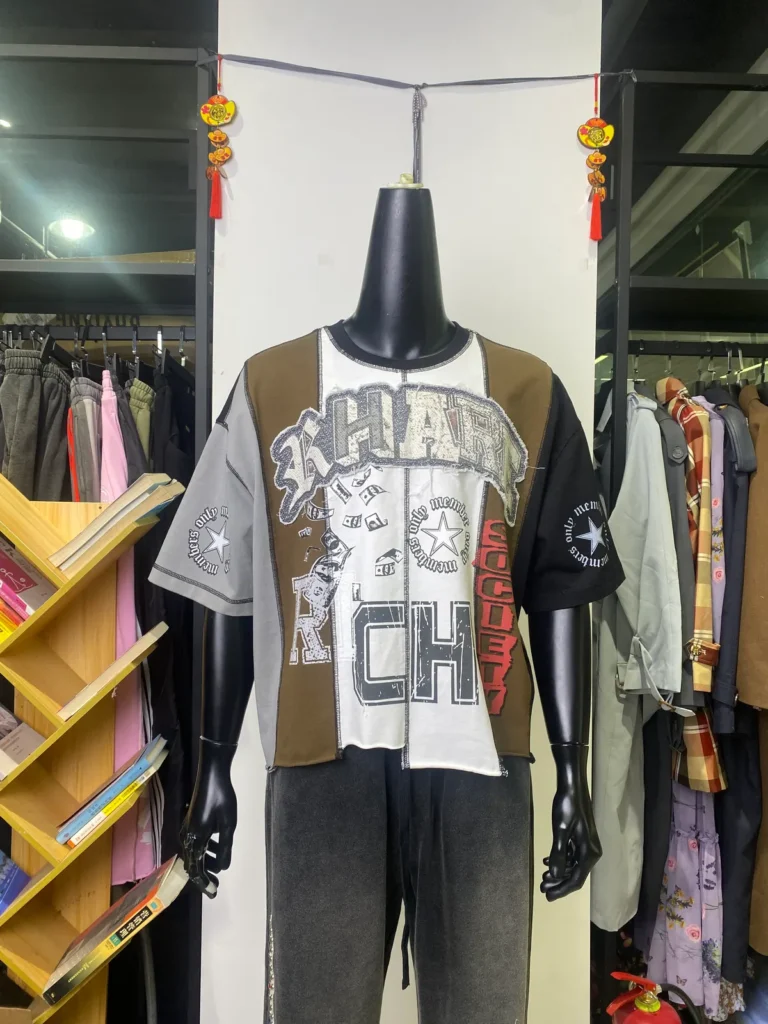
Varsity jackets invite decoration, but a design should be planned around physical placement rather than only a flat graphic. Front chest marks, sleeve patches, back embroidery, felt letters, chenille, screen printing, appliqué and woven labels all create different dimensions and production steps. List each application separately in the brief: location, finished size, colors, artwork file and whether it must be sewn, embroidered, printed or heat-applied.
For example, a large back embroidery may need to be completed before the lining and final assembly. A chenille letter may need a defined stitch border. A sleeve patch should be positioned so it does not sit awkwardly across a seam. If several decoration methods are combined, ask to see the actual arrangement on the sample rather than approving each component in isolation.
Use vector artwork where possible, with intended colors and dimensions. A clear artwork file is particularly useful for embroidery and patches, where extremely fine detail can need simplification at garment scale. For a broader overview of brand labels, hangtags and packing that can accompany the jacket, see our private-label streetwear checklist.
Get the fit and measurement points right before sampling
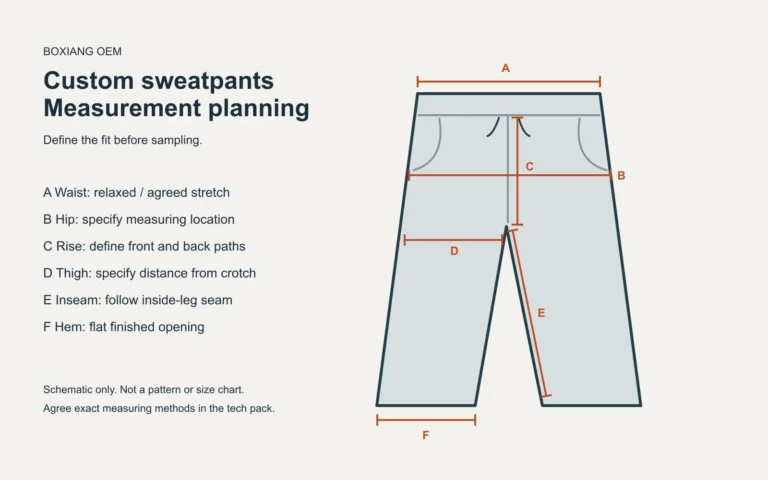
Fit is easy to underestimate when a reference photo uses a different body type or fabric. State whether the intended silhouette is regular, cropped, relaxed or oversized, then identify the measurements that matter most: chest, body length, shoulder, sleeve length, cuff opening and hem opening. For an oversized style, clarify whether the extra room comes from width, dropped shoulders, length or all three. Those are separate decisions.
A size chart with tolerances is ideal. If you are still building one, identify a reference garment and note which dimensions should change. During sample review, lay the jacket flat and compare the finished measurements with the approved chart. Also check the balance: collar shape, snap alignment, sleeve pitch, rib recovery and the way the jacket hangs when worn.
What to confirm in a custom varsity jacket sample
The sample is where the product decisions become visible. Use one approval record that covers construction, artwork and presentation. For basic styles, sample timing can start from confirmed design information and payment of the sample fee; more involved materials, patch programs or construction details may need their own confirmed schedule. Bulk planning starts after sample approval and deposit, so it is worth consolidating changes before that point.
- Check body, sleeve, rib and lining colors under clear daylight photos or against approved references.
- Measure key points against the agreed size chart and note the size sampled.
- Check placement, scale and edge finish for every patch, embroidery or print.
- Open and close all snaps or zips; review their alignment and feel.
- Check the inside finishing, labels and lining around seams.
- Wear or fit-check the sample if possible, especially when the target silhouette is oversized or cropped.
- Put all corrections in one final approval message before bulk production begins.
Our custom clothing sampling process explains how to turn that review into a clear next-step list for production.
MOQ, quantities and production planning
For Boxiang OEM projects, the normal starting MOQ is 50 pieces per style per color, with sizes mixed within that color. The workable construction and quote still depend on the actual jacket, material, decoration and custom trims. A varsity jacket with several special components should be quoted from its real specification, not from a generic jacket price.
When requesting a quote, separate the order by color and size, and include the destination or nominated forwarder requirements where known. Freight can be arranged separately or through a buyer’s own forwarder. For the core order questions, our streetwear MOQ guide is a useful companion.
Frequently asked questions
Can I make a varsity jacket with custom patches and embroidery?
Yes. Send the artwork, placement direction, finished dimensions and preferred process for each element. The factory can then review whether the arrangement is practical for the chosen materials and sample it as part of the developed style.
Can I combine different materials on one jacket?
Yes, provided the construction is planned for the specific materials. A body-and-sleeve contrast, rib and lining are normal parts of a varsity jacket brief. Share clear references so the proposed material direction can be confirmed before sampling.
What should I send for a custom varsity jacket quote?
Send front and back references or a tech pack, quantity per color, size range, required logo or patch files, target market and any packing requirements. If some points are undecided, state that clearly; the team can identify the details that need confirmation for a workable quote.
Develop your custom varsity jacket with a clear brief
The strongest custom varsity jackets have a deliberate connection between silhouette, materials and decoration. Start with the look you need, specify the details that matter and use the sample to check the whole garment. When you are ready, explore our custom varsity jacket manufacturing options or request a quote with your reference images and quantity per color.
Have a question about your own design?
Share your reference, quantity per color and destination. Our team can review the relevant options for your order.
Discuss your projectExplore manufacturing options